
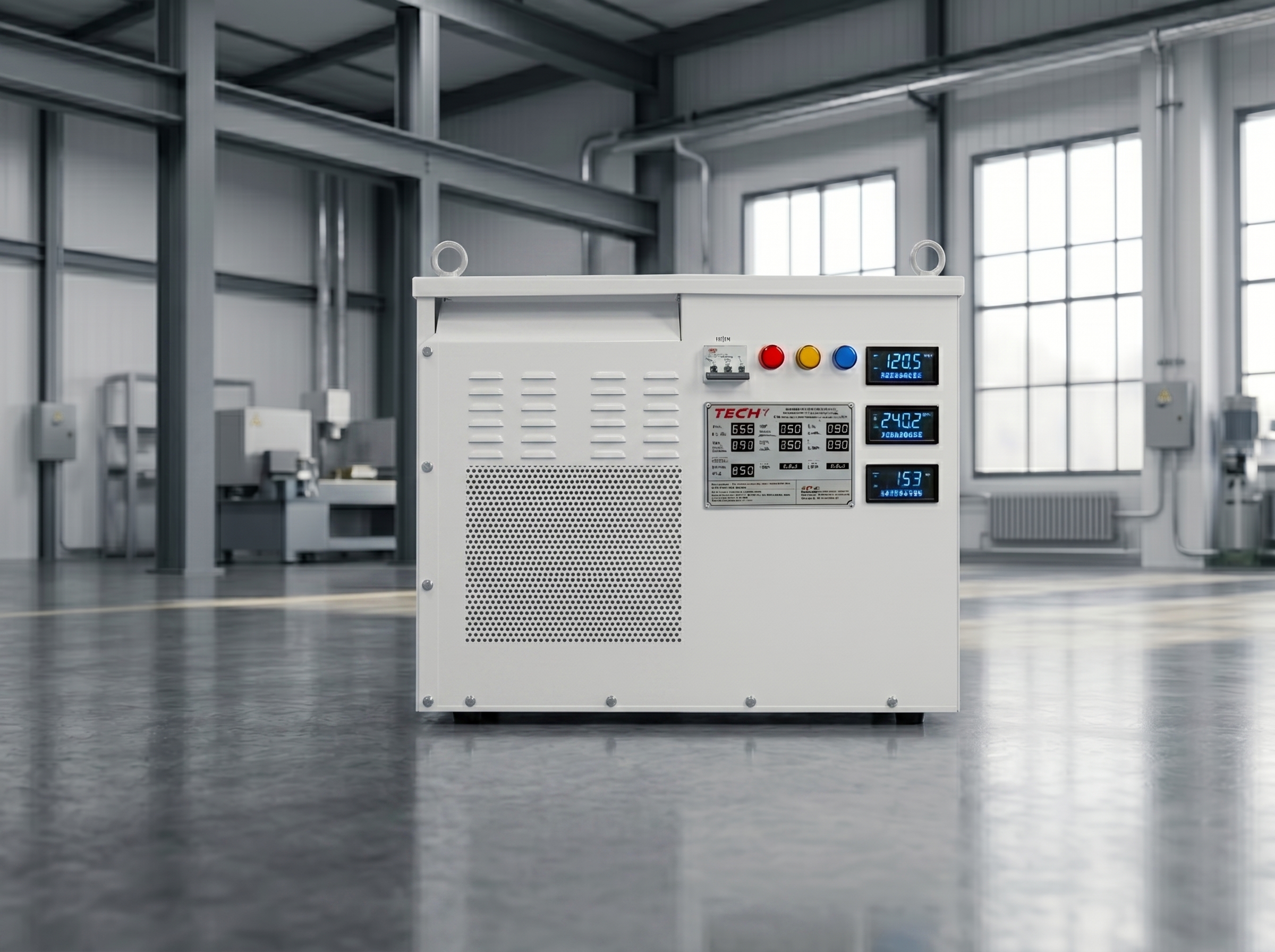
Introduction to Three-Phase Transformers
A three-phase transformer plays a major role in modern electrical power distribution systems. These transformers help industries, commercial facilities, and utility networks manage high-power electrical loads efficiently. Moreover, they improve energy transmission, reduce power loss, and support stable electrical performance across large-scale operations.
What is a Three-Phase Transformer?
A three-phase transformer operates with a three-phase alternating current (AC) supply instead of a single-phase system. It uses three sets of windings to transfer electrical energy efficiently between circuits. As a result, industries prefer this transformer type for high-power applications.
Construction and Working Principle of Three-Phase Transformers
Three-phase transformers contain primary and secondary windings arranged in delta (∆) or wye (Y) configurations. Each winding receives one phase of the electrical supply.
When AC current flows through the primary winding, it creates magnetic flux inside the transformer core. The magnetic field then induces voltage in the secondary winding. Consequently, the transformer adjusts voltage levels according to the requirements of the power distribution system.
Advantages of Three-Phase Transformers
Higher Power Capacity
Three-phase transformers handle large electrical loads efficiently. Therefore, industries such as manufacturing plants, steel mills, and refineries rely on them for continuous operations.
Efficient Power Transmission
These transformers improve power transmission efficiency because three-phase systems require fewer conductors. In addition, they help reduce energy losses during electricity distribution.
Compact Design and Reduced Weight
A single three-phase transformer occupies less space than three separate single-phase units. As a result, businesses save installation space and reduce equipment weight.
Applications of Three-Phase Transformers
Power Distribution Systems
Utility companies use three-phase transformers to step down high-voltage electricity from power plants into lower voltages for homes and commercial buildings.
Industrial Applications
Factories and processing plants depend on these transformers to operate heavy machinery and industrial equipment efficiently.
Renewable Energy Integration
Wind farms and solar power systems use transformer technology to connect generated electricity to the main power grid safely and efficiently.
Railway Power Systems
Railway networks use these transformers to convert overhead electrical power into suitable voltage levels for train operations.
Maintenance and Safety Considerations
Regular maintenance keeps transformers operating safely and efficiently. Technicians should inspect insulation systems, monitor temperatures, and check for electrical faults frequently.
Furthermore, qualified professionals should always handle installation and repairs. Proper maintenance practices not only improve performance but also extend transformer lifespan.
